Stanislaw Ulam
 Jovan Stosic
Jovan Stosic
Jovan Stosic
Jovan Stosic
Jovan Stosic
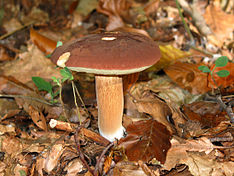
Source: Imleria badia – Wikipedia
Jovan Stosic
| Russula cyanoxantha | |
|---|---|
 |
|
| Russula cyanoxantha | |
| Scientific classification | |
| Kingdom: | Fungi |
| Division: | Basidiomycota |
| Class: | Agaricomycetes |
| Order: | Russulales |
| Family: | Russulaceae |
| Genus: | Russula |
| Species: | R. cyanoxantha |
| Binomial name | |
| Russula cyanoxantha (Schaeff.) Fr. |
|
| Russula cyanoxantha | |
|---|---|
 |
|
 |
gills on hymenium |
  |
cap is flat
or convex |
 |
hymenium is adnate |
 |
stipe is bare |
 |
spore print is white |
 |
ecology is mycorrhizal |
 |
edibility: choice |
Russula cyanoxantha, synonymous with R. xyanoxantha, commonly known as the charcoal burner, is a basidiomycete mushroom, distinguished from most other members of the Russula genus by the fact that its gills do not split, but are soft and flexible. It is one of the most common species of Russula in Europe.
It is an edible mushroom. It was designated “Mushroom of the Year” in 1997 by the German Association of Mycology.
The most salient characteristic is the weak gills, which feel greasy to the touch, are flexible and do not break. The cap is 4–15 cm (1.5–6 in) wide, convex at first and later flattened, and greenish to bright brown (they vary considerably in color). The stipe is pure white, slightly convex underneath, up to 10 cm in height and 1.5–2.5 cm (0.5–1 in) in diameter. The spores are pure white. The stipe will give a green reaction when rubbed with iron salts (Ferrous Sulphate). Most other (but not all) russula species give a salmon reaction. Coupled with the gill flexibility this is a good diagnostic clue to species level.
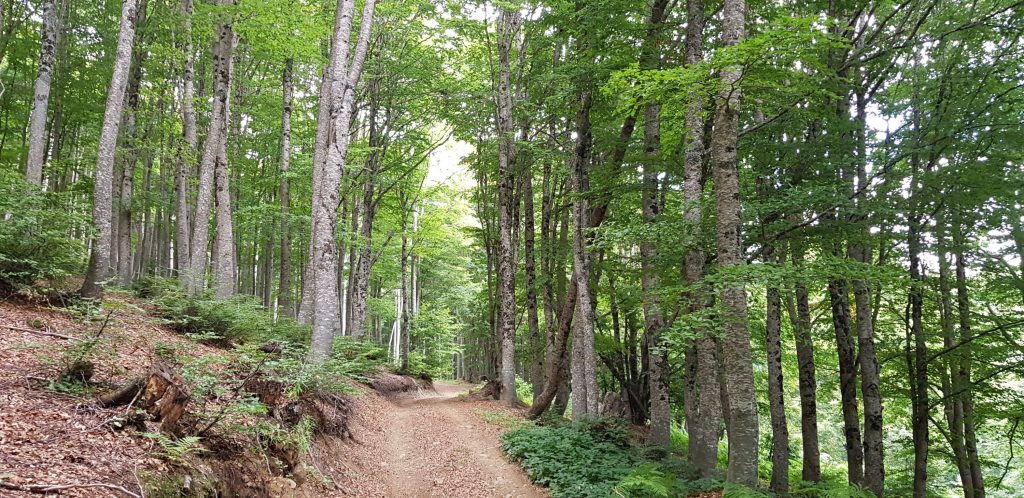
Russula cyanoxantha grows in slightly acidic, but nutrient-rich soil. Like all Russulas, it is a mycorrhizal fungus. It is found most commonly in beech forests, and often in deciduous or mixed forests, appearing from May to November, with the highest concentration in July to September.
Suitable for many kinds of preparation; the flesh is not as hard as that of many other edible Russulas. It has a mild, nutty taste.
The cap of the grey-green Russula Russula grisea is more blue-grey but has violet or green hues with light cream gills. This fungus also grows in mixed forests, particularly under beech, and more rarely in coniferous forests.
Source: Russula cyanoxantha – Wikipedia
Jovan Stosic
Jovan Stosic
Jovan Stosic
Jovan Stosic
Pronunciation: ‘bēch
Function: noun
Inflected Form: plural beech·es or beech
Etymology: Middle English beche, from Old English bēce; akin to Old English bōc beech, Old High German buohha, Latin fagus, Greek phēgos oak
Date: before 12th century
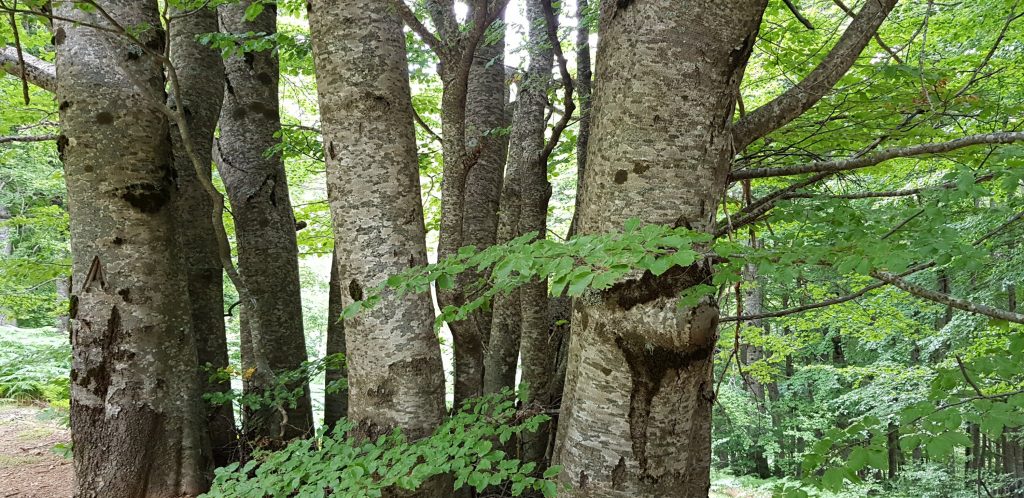
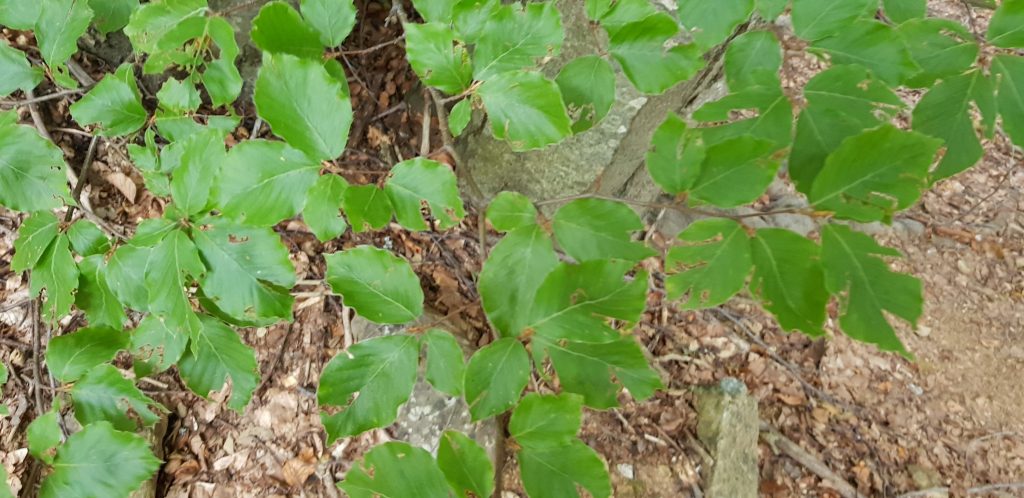
: any of a genus (Fagus of the family Fagaceae, the beech family) of hardwood trees with smooth gray bark and small edible nuts also : its wood
–beech·en \’bē-chən\ adjective
copper beech
Function: noun
Date: 1846
: a beech with shining coppery-red leaves that is a widely planted cultivar of a beech (Fagus sylvatica) native to Europe
…
Concise Oxford English Dictionary
beech
■ noun a large tree with smooth grey bark, glossy leaves, and hard, pale, fine-grained wood. [Fagus sylvaticus (Europe) and other species.]
OE bēce, of Gmc origin.
…
EngMac
beech
n бука; beech II a букин, буков; бука
…
English-Serbian dictionary
Beech
Bukva
Jovan Stosic
 Jovan Stosic
 Jovan Stosic
 Jovan Stosic
 Jovan Stosic