Jovan Stosic
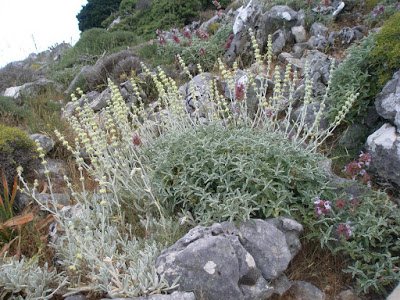
A native of Greece and a selective few countries in Europe, Sideritis Syriaca – this is a very popular medicinal tea mostly known as “mountain tea”. It has a long list of beneficial properties, such as detoxifier, anti-anaemic, anti-inflammatory, anti-oxidant, disinfectant, bacteoriostatic, stimulant, and diuretic.
The essential oil of Sideritis Syriaca is a very potent microbicidal and at the same time recognised for its ability to enhance bone strength and prevent osteoporosis. In order to provide these benefits, the administration of the herb should be on daily basis.
Its anti-oxidant properties are put to good use in anti-aging herbal creams and lotions. It is also known to be able preserve the natural colour of the hair (preventing whitening) if used regularly. Sideritis Syriaca is also known to protect from sunburn, UV and generally skin diseases caused by over-exposure to the daylight/ sun UV radiation.
A tea made out of this herb drank on regular basis would help keep the digestive system working perfectly well. It is also potent in treatment of a wide array of respiratory diseases, anxiety and symptoms of cold – sore throat, body ache and headache.
Sideritis Syriaca has a special and very attractive smell for which reason it is used in many perfumes as well.
Botanical Name: Sideritis Syriaca Common Name: Cretan Mountain Tea – Antiviral, Antibacterial, Diuretic, Tonic, Antioxidant, Antifungal, Anti-inflammatory, Immune System, Colds.
—
The Cretan Mountain Tea (Malotira) is being known since the age of Dioskourides (1st Century A.D), and took its name (Sideritis) from its ability to heal wounds made from iron pieces (sidiros means iron in Greek language). According to greek tradition, it was used as a panacea for any illness, while recent studies have proved the special attributes of the plant. It will kill all kind of microbes, it will strengthen the bodys immune systen, it will give the body a boost, it is very good for colds in the winter and it is even good for eye problems if one rinses the eyes regularly with the tea.
There has been some main research the last years which has uncovered many it its drastic ingredients and this has been proved by experiments. Around 99 different active ingredients has been idientified and one of the most interesting finds is that it can bee drunk in big doses and continually without negative effects. This means that it is an ideal herb to use in order to strenghten you bodys immune system and generally well feeling.
Recent medical studies has also showed that this herb will fight cancer and will also help to cure and delay osteoporosis. The last finds about the positive effects as to osteporosis has been studied by a group of scientists at the University of Athens.
Source:
Mountain Tea Cretan (Malotira) – Sideritis Syriaca – Wild Μαλοτήρας Τσαι του βουνού Κρητης
https://en.m.wikipedia.org/wiki/Sideritis_syriaca