Composers and performers

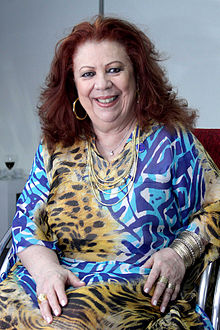
Beverly Sills

Beverly Sills (May 25, 1929 – July 2, 2007) was an American operatic soprano whose peak career was between the 1950s and 1970s.

Although she sang a repertoire from Handel and Mozart to Puccini, Massenet and Verdi, she was known for her performances in coloratura soprano roles in live opera and recordings. Sills was largely associated with the operas of Donizetti, of which she performed and recorded many roles. Her signature roles include the title role in Donizetti’s Lucia di Lammermoor, the title role in Massenet’s Manon, Marie in Donizetti’s La fille du régiment, the three heroines in Offenbach‘s Les contes d’Hoffmann, Rosina in Rossini‘s The Barber of Seville, Violetta in Verdi’s La traviata, and most notably Elisabetta in Roberto Devereux.

The New York Times noted, “In her prime her technique was exemplary. She could dispatch coloratura roulades and embellishments, capped by radiant high Ds and E-flats, with seemingly effortless agility. She sang with scrupulous musicianship, rhythmic incisiveness and a vivid sense of text.” NPR commented, her voice was “Capable of spinning a seemingly endless legato line, or bursting with crystalline perfection into waves of dazzling fiorature and thrilling high notes.”

After retiring from singing in 1980, she became the general manager of the New York City Opera. In 1994, she became the chairwoman of Lincoln Center and then, in 2002, of the Metropolitan Opera, stepping down in 2005. Sills lent her celebrity to further her charity work for the prevention and treatment of birth defects.
https://en.wikipedia.org/wiki/Beverly_Sills

Roberta Peters

Roberta Peters (May 4, 1930 – January 18, 2017) was an American coloratura soprano.

One of the most prominent American singers to achieve lasting fame and success in opera, Peters is noted for her 35-year association with the Metropolitan Opera Company in New York, among the longest such associations between a singer and a company in opera. She was awarded the National Medal of Arts in 1998.

https://en.wikipedia.org/wiki/Roberta_Peters

Giovanni Battista Pergolesi

Giovanni Battista Draghi (Italian pronunciation: [dʒoˈvanni batˈtista ˈdraːɡi]; 4 January 1710 – 16 or 17 March 1736), often referred to as Giovanni Battista Pergolesi (Italian: [perɡoˈleːzi; -eːsi]), was an Italian composer, violinist and organist. His best-known works include his Stabat Mater and the opera La serva padrona (The Maid Turned Mistress). His compositions include operas and sacred music. He died of tuberculosis at the age of 26.

Source: Giovanni Battista Pergolesi – Wikipedia

Arnold Schoenberg

Arnold Schoenberg or Schönberg (/ˈʃɜːrnbɜːrɡ/, US also /ˈʃn-/; German: [ˈʃøːnbɛɐ̯k] (About this soundlisten); 13 September 1874 – 13 July 1951) was an Austrian, and later American, composer, music theorist, teacher, writer, and painter. He was associated with the expressionist movement in German poetry and art, and leader of the Second Viennese School. With the rise of the Nazi Party, Schoenberg’s works were labeled degenerate music, because they were modernist and atonal. He immigrated to the United States in 1934.

Schoenberg’s approach, both in terms of harmony and development, has been one of the most influential of 20th-century musical thought. Many European and American composers from at least three generations have consciously extended his thinking, whereas others have passionately reacted against it.

Schoenberg was known early in his career for simultaneously extending the traditionally opposed German Romantic styles of Brahms and Wagner. Later, his name would come to personify innovations in atonality (although Schoenberg himself detested that term) that would become the most polemical feature of 20th-century art music. In the 1920s, Schoenberg developed the twelve-tone technique, an influential compositional method of manipulating an ordered series of all twelve notes in the chromatic scale. He also coined the term developing variation and was the first modern composer to embrace ways of developing motifs without resorting to the dominance of a centralized melodic idea.

Schoenberg was also an influential teacher of composition; his students included Alban Berg, Anton Webern, Hanns Eisler, Egon Wellesz, Nikos Skalkottas, Stefania Turkewich, and later John Cage, Lou Harrison, Earl Kim, Roberto Gerhard, Leon Kirchner, Dika Newlin, and other prominent musicians. Many of Schoenberg’s practices, including the formalization of compositional method and his habit of openly inviting audiences to think analytically, are echoed in avant-garde musical thought throughout the 20th century. His often polemical views of music history and aesthetics were crucial to many significant 20th-century musicologists and critics, including Theodor W. Adorno, Charles Rosen, and Carl Dahlhaus, as well as the pianists Artur Schnabel, Rudolf Serkin, Eduard Steuermann, and Glenn Gould.

Schoenberg’s archival legacy is collected at the Arnold Schönberg Center in Vienna.

https://en.wikipedia.org/wiki/Arnold_Schoenberg