sudo apt-get install php7.0-mysql
Source: How To Upgrade to PHP 7 on Ubuntu 14.04 | DigitalOcean
 Jovan Stosic
sudo apt-get install php7.0-mysql
Source: How To Upgrade to PHP 7 on Ubuntu 14.04 | DigitalOcean
Jovan Stosic
The hartley (symbol Hart), also called a ban, or a dit (short for decimal digit), is a logarithmic unit which measures information or entropy, based on base 10 logarithms and powers of 10, rather than the powers of 2 and base 2 logarithms which define the bit, or shannon. One ban or hartley is the information content of an event if the probability of that event occurring is 1/10.[1] It is therefore equal to the information contained in one decimal digit (or dit), assuming a priori equiprobability of each possible value.
As a bit corresponds to a binary digit, a ban corresponds to a decimal digit. A deciban is one tenth of a ban; the name is formed from ban by the SI prefix deci-.
One hartley corresponds to log2(10) bit = ln(10) nat, or approximately 3.322 Sh,[a] or 2.303 nat. A deciban is about 0.332 Sh.
Though not an SI unit, the hartley is part of the International System of Quantities, defined by International Standard IEC 80000-13 of the International Electrotechnical Commission. It is named after Ralph Hartley.
Jovan Stosic
Ralph Vinton Lyon Hartley (November 30, 1888 – May 1, 1970) was an electronics researcher. He invented the Hartley oscillator and the Hartley transform, and contributed to the foundations of information theory.
Jovan Stosic
Vladimir Aleksandrovich Kotelnikov (Russian Владимир Александрович Котельников, scientific transliteration Vladimir Alexandrovič Kotelnikov, 6 September 1908 in Kazan – 11 February 2005 in Moscow) was an information theory and radar astronomy pioneer from the Soviet Union. He was elected a member of the Russian Academy of Science, in the Department of Technical Science (radio technology) in 1953. From 30 July 1973 to 25 March 1980 Kotelnikov served as Chairman of the RSFSR Supreme Council.
Jovan Stosic
Harry Nyquist (born Harry Theodor Nyqvist /ˈnaɪkwɪst/, Swedish: [nyːkvɪst]; February 7, 1889 – April 4, 1976) was a Swedish-born American electronic engineer who made important contributions to communication theory.
Jovan Stosic
Jovan Stosic
Jovan Stosic
Jovan Stosic
Jovan Stosic
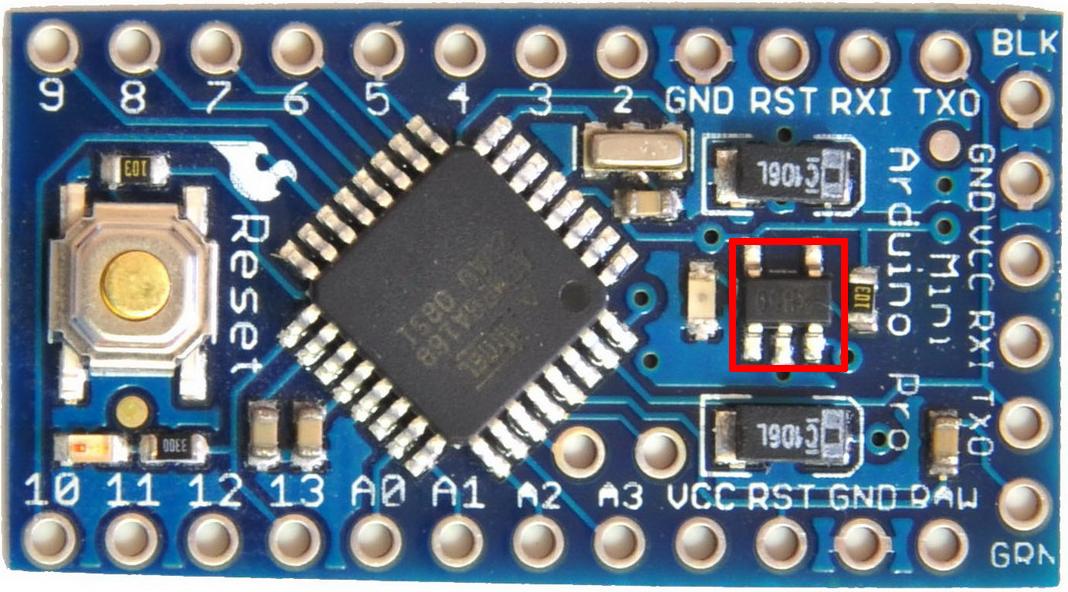
KB33, S20K, F34V, L0RA, L0RB80e., 80'0KB50, L05, L0UA, L0UBR160JAC6s, 16.000-30, A1, A'N, A'ahttps://arduino.stackexchange.com/questions/8511/how-to-identify-arduino-mini-pro-5v-vs-3-3v
Jovan Stosic
Jovan Stosic