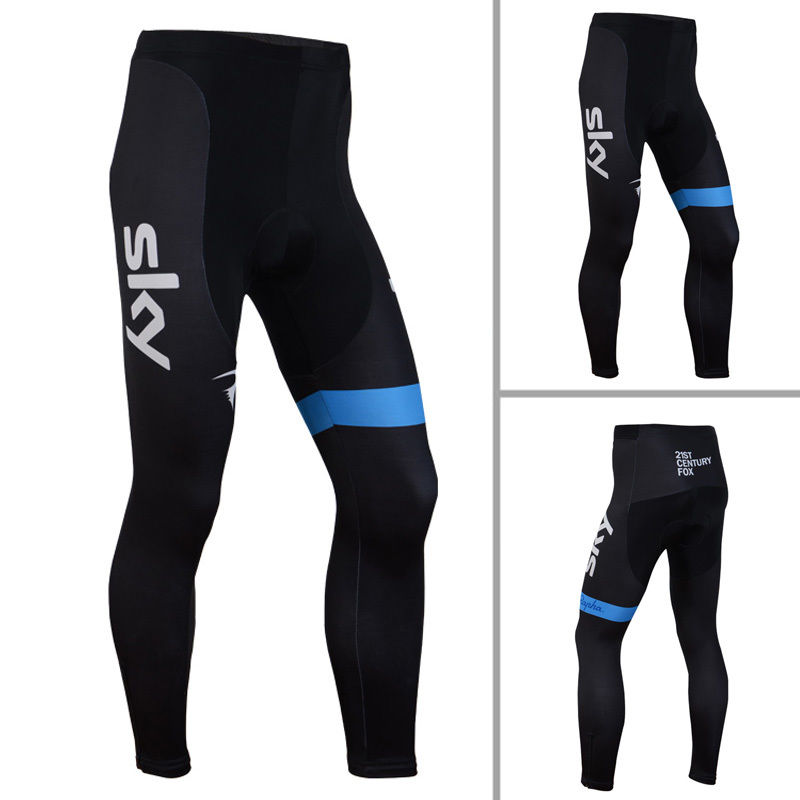
New Mens Bicycle Padded Pants Riding Outdoor Sports Wear Cycling Lycra Tights
Купив M, големи се и следните треба S да бидат.
Source: New Mens Bicycle Padded Pants Riding Outdoor Sports Wear Cycling Lycra Tights | eBay
 Jovan Stosic
New Mens Bicycle Padded Pants Riding Outdoor Sports Wear Cycling Lycra Tights
Купив M, големи се и следните треба S да бидат.
Source: New Mens Bicycle Padded Pants Riding Outdoor Sports Wear Cycling Lycra Tights | eBay
Jovan Stosic
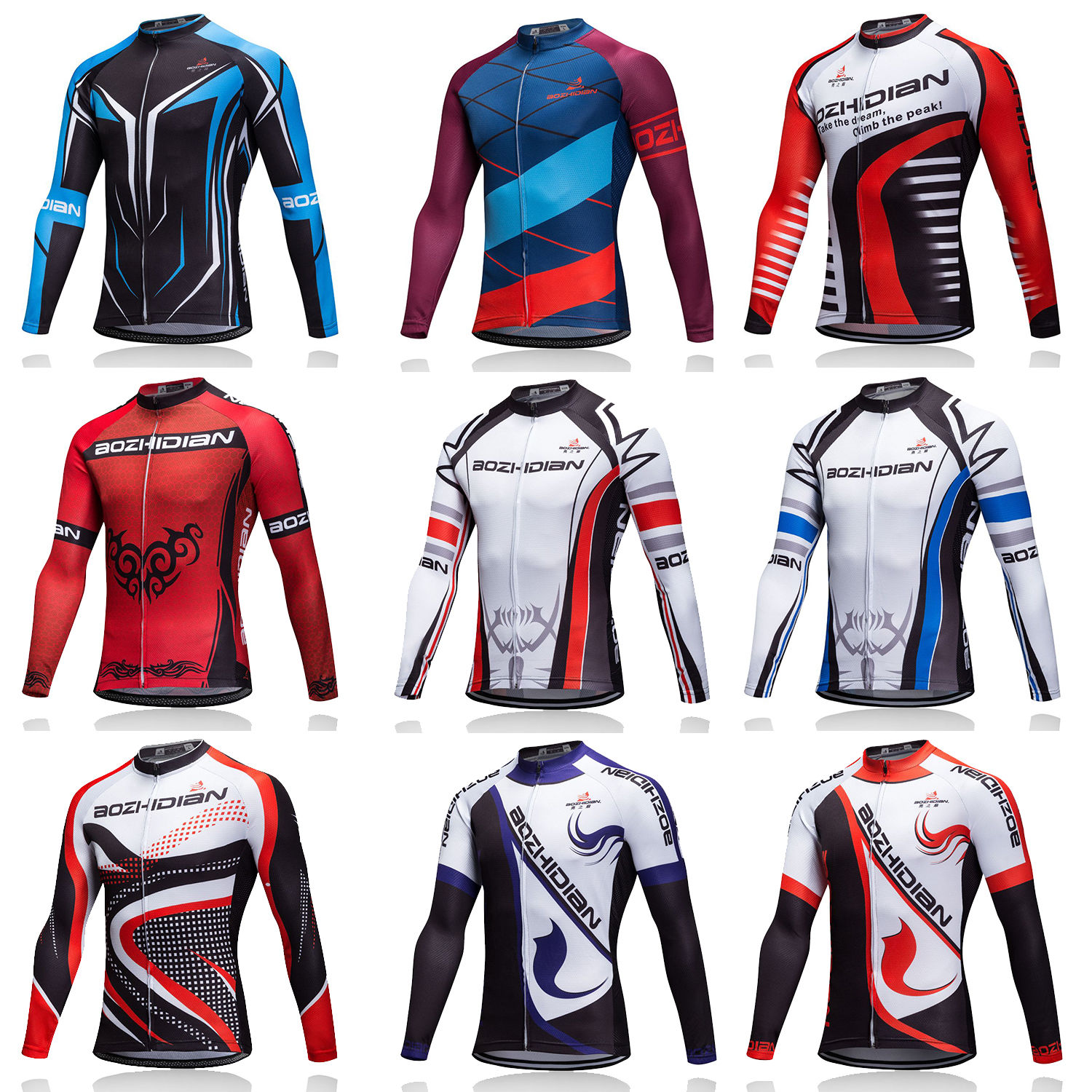
Men’s Long Sleeve Bike Clothes Tops Bicycle Cycle Cycling Jersey Shirts S-5XL
Многу добра блуза. Јас зедов M голема е, ако земам пак ќе земам S.
Source: Men’s Long Sleeve Bike Clothes Tops Bicycle Cycle Cycling Jersey Shirts S-5XL | eBay
Jovan Stosic
Jovan Stosic
Jovan Stosic
Overview: Bike Fitting vs. Bike Sizing–The Contact Points
This article is focused on road bike fitting and not bike sizing. Often these two descriptions become intertwined but they are completely different. With that said, fitting a road bicycle works best when you start with the right size bike or at a minimum, a bicycle that is close enough to your right size.
Sizing a road bicycle is not as complicated as you may have been led to believe, in part due to the reality that a good bike fit actually has little to do with the bicycle per se. Fitting a road bicycle comes down to the contact points (connection points) between the cyclist and their bicycle. These five connection points are the right and left foot, the pelvis, and right and left hands. So even if your bike is not the correct “size,” as long as you get the connection points in the ideal place, you can still achieve a good and comfortable bike fit.
A proper bike fit has more to do with the saddle, handlebars, brake levers and hoods, stem and, most importantly, shoes, cleats, and pedals.
Jovan Stosic
In cycling, cadence (or pedalling rate) is the number of revolutions of the crank per minute; this is the rate at which a cyclist is pedalling/turning the pedals. Cadence is directly proportional to wheel speed, but is a distinct measurement and changes with gearing—which determines the ratio of crank rpm to wheel rpm.
Cyclists typically have a cadence at which they feel most comfortable, and on bicycles with many gears it is possible to maintain a preferred cadence at a wide range of speeds. Recreational and utility cyclists typically cycle around 60–80 rpm. According to cadence measurement of 7 professional cyclists during 3 week races they cycle about 90 rpm during flat and long (~190 km) group stages and individual time trials of ∼50 km. During ∼15 km uphill cycling on high mountain passes they cycle about 70 rpm.[1] Cyclists choose cadence to minimise muscular fatigue, and not metabolic demand, since oxygen consumption is lower at cadences 60-70 rpm.[2] When cycling at 260 W, a pedal force was the lowest at 90 rpm, lower than at 60, 75, 105 or 120 rpm. It is primarily due to increase of inertia of the crank with increasing cadence.[2]
Any particular cyclist has only a narrow range of preferred cadences, often smaller than the general ranges listed above. This in turn influences the number and range of gears which are appropriate for any particular cycling conditions.[3]
Certain cyclocomputers are able to measure cadence, and relay the reading to the cyclist via a display, typically mounted on the bicycle’s
Source: Cadence (cycling) – Wikipedia
Jovan Stosic
Jovan Stosic
Jovan Stosic
Jovan Stosic
KM MarjanCompany introduction:Wholesaler KM – Marjan dooel Skopje is one of the first companies in Republic of Macedonia that offers SALE and SERVICE for medical equipment. Our product pallet includes: blood pressure monitors, blood glucose monitors, nebulizers, air humidifiers, air purifiers, stethoscopes, infra-red lamps, digital thermometers etc. Tradicionally we are working with worldwide known factories for medical equipment. We are exclusive importers and distributors in Balkan countries for the following companies : Bokang, Tianjun Empecs Medical, Genexel Medical, Elettroplastica, ibp, Welch Allyn (Spiedel Keller), efbe-schott, jawon medical, bm – korea. We would like to thank our lpyal clients and partners for their cooperation and we hope that our friendly relationship will go on in future.Contact Person Name:Марјан КрстиќAddress:ул. Мајка Тереза (Водњанска) бр. 60Post Code:1000City:Skopje , MacedoniaCell Phone #:00 389 70 260 687Telephone #: : Click here to see the phone numberYear registered:1993
Source: MarketKonekt
Jovan Stosic
KM Marjan Address : Branko Zarevski 23 (Dimitije Cupovski) Place: Skopje Distance: ≈764 м Categories:medical equipment – repair, medical equipment
+389 2 3111831 Telephone 2: +389 2 3111831 Fax: +389 2 3223786
Source: KM Marjan
Jovan Stosic
A sphygmomanometer, blood pressure meter, blood pressure monitor, or blood pressure gauge is a device used to measure blood pressure, composed of an inflatable cuff to collapse and then release the artery under the cuff in a controlled manner,[1] and a mercury or mechanical manometer to measure the pressure. It is always used in conjunction with a means to determine at what pressure blood flow is just starting, and at what pressure it is unimpeded. Manual sphygmomanometers are used in conjunction with a ste
Source: Sphygmomanometer – Wikipedia