Gary Hart
 Jovan Stosic
Jovan Stosic
Jovan Stosic
Jovan Stosic
Jovan Stosic
The Epic of Gilgamesh (/ˈɡɪlɡəmɛʃ/) is an epic poem from ancient Mesopotamia that is often regarded as the earliest surviving great work of literature. The literary history of Gilgamesh begins with five Sumerian poems about Bilgamesh (Sumerian for “Gilgamesh”), king of Uruk, dating from the Third Dynasty of Ur ( 2100 BC). These independent stories were later used as source material for a combined epic in Akkadian. The first surviving version of this combined epic, known as the “Old Babylonian” version, compiled by Sîn-lēqi-unninni, dates to the 18th century BC and is titled after its incipit, Shūtur eli sharrī (“Surpassing All Other Kings”). Only a few tablets of it have survived. The later “standard” version dates from the 13th to the 10th centuries BC and bears the incipit Sha naqba īmuru (“He who Saw the Abyss”, in modern terms: “He who Sees the Unknown”). Approximately two thirds of this longer, twelve-tablet version have been recovered. Some of the best copies were discovered in the library ruins of the 7th-century BC Assyrian king Ashurbanipal.
Jovan Stosic
Jovan Stosic
For a company, deciding who to try to sell its products to is a big choice. Sometimes, the products themselves dictate the customer and ultimately the market a company participates in. In this lesson we will learn about two main markets, vertical and horizontal.
A First Look at Markets
Meet Tonya! Tonya has just started her own business selling flowers. Because she loves to garden she decided that she could make a career out of her passion. But while she is a very skilled gardener and very knowledgeable about a wide variety of plants, her business skills are basic at best. She knows that if she is going to be successful, she needs to reach out to those who would be most interested in her products. But where does she begin? Who is her target consumer? What type of market would work best for her business? Come along as Tonya learns all about markets in order to excel at her new business.
Foundation Definitions
Before Tonya can decide which market to target, she needs to learn about her options. Basically, there are two major markets that she can pursue. First there is a horizontal market. A horizontal market is the more basic of the two markets in that it allows a business to market to a wide variety of potential customers, regardless of what type of industry or business it is in. For example, paper would be a product that could be marketed horizontally. People in a wide variety of industries use paper. Paper is not a specialty product that only those in a special industry would use.
A vertical market is a more specific market that focuses on the needs of a certain group of individuals in a certain industry. In other words, a vertical market prioritizes specialties in specific markets. For example, a bank that specializes in agricultural loans would be a vertical market. Only those who are looking for money to fund their agricultural needs would be in the market for an agricultural loan. The loan is for a specific group of people in a specific industry.
Advantages of Both Markets
So why would Tonya pick one market over the other? What do horizontal markets offer that vertical markets do not and vice versa? Below you will find the advantages of choosing each market.
Advantages of Vertical Markets
1. Specialized products – With vertical markets, businesses know that they can provide products that are specialized to certain companies and their needs. This makes those companies happy because they have a producer that can provide them with the specialty product they are looking for. For Tonya, this could be beneficial because she would be able to market to customers that are specifically looking for the special plants she grows.
2. Greater concentration – Companies that specialize in one particular product can spend all of their time focusing on that product. A company that creates multiple products has to spread its focus amongst all of the products. However, a company with just one product can put all of its time, energy, and money into the success of that product. Tonya knows that if she chose a vertical market, she would be able to sell those flowers that are special to her and that she excels at growing.
3. Competition – With a more specialized a product there are fewer companies producing the same product. For Tonya, if she decides to grow a rare breed of roses, she may have less competition because only a few other gardeners grow that specialty.
Source: Vertical Markets vs. Horizontal Markets | Study.com
Jovan Stosic
Jovan Stosic
Jovan Stosic
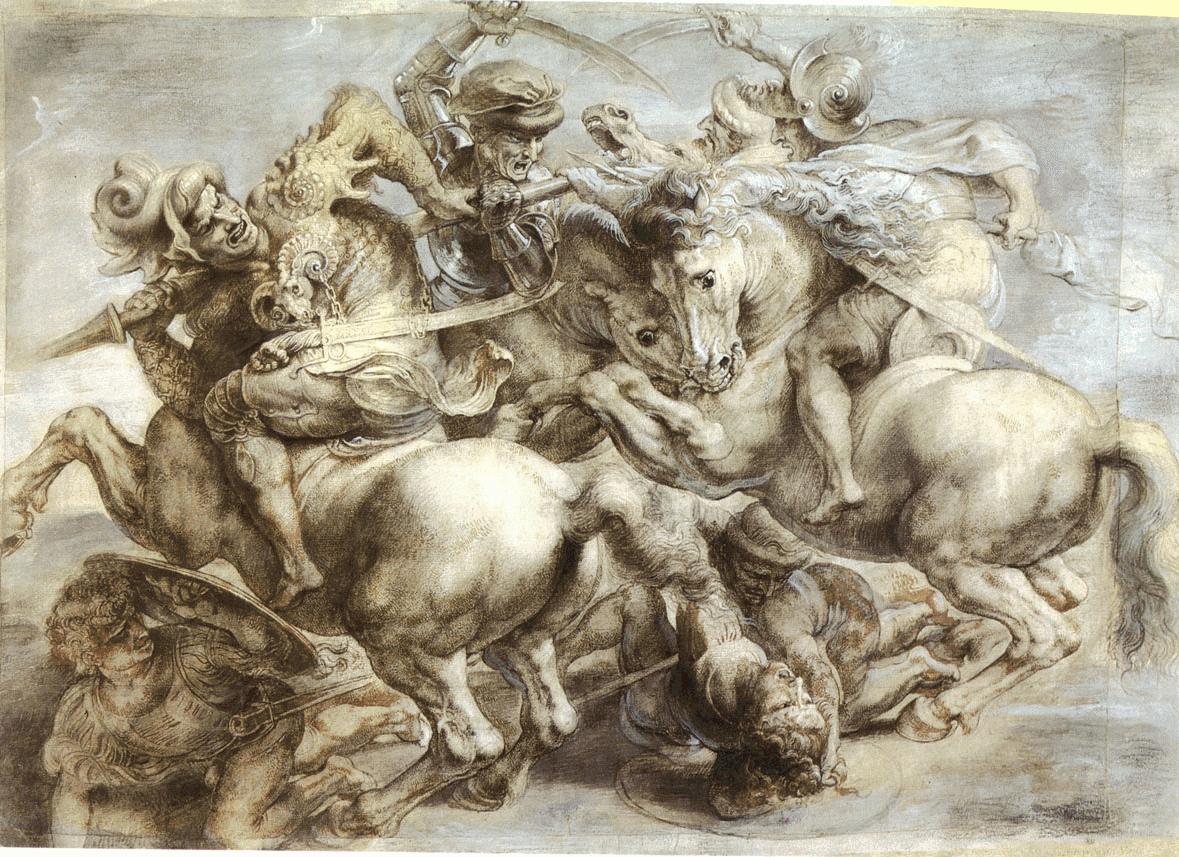
The Battle of Anghiari was fought on 29 June 1440, between the forces of Milan and those of the Italian League led by the Republic of Florence in the course of the Wars in Lombardy. The battle was a victory for the Florentines, securing Florentine domination of central Italy. The battle is well known for its depiction in a now-lost painting by Leonardo da Vinci. It is also remarkable for the fact that though the battle lasted all day, involving several thousand troops, it was said that only one soldier was
Source: Battle of Anghiari – Wikipedia
Jovan Stosic
Jovan Stosic
Jovan Stosic
Ludovico Maria Sforza (also known as Ludovico il Moro;[1] 27 July 1452 – 27 May 1508), was Duke of Milan from 1494, following the death of his nephew Gian Galeazzo Sforza, until 1499. A member of the Sforza family, he was the fourth son of Francesco I Sforza. He was famed as a patron of Leonardo da Vinci and other artists, and presided over the final and most productive stage of the Milanese Renaissance. He is probably best known as the man who commissioned The Last Supper.
Source: Ludovico Sforza – Wikipedia
Jovan Stosic
Kevin David Mitnick (born August 6, 1963) is an American computer security consultant, author, and hacker, best known for his high-profile 1995 arrest and later five years in prison for various computer and communications-related crimes. Mitnick’s pursuit, arrest, trial, and sentence along with the associated journalism, books, and films were all controversial.
He now runs the security firm Mitnick Security Consulting, LLC which helps test companies’ security strengths, weaknesses, and potential loopholes. He is also the Chief Hacking Officer of the security awareness training company KnowBe4, as well as an active advisory board member at Zimperium,[9] a firm that develops a mobile intrusion prevention system
Jovan Stosic