Engineering and technology notes
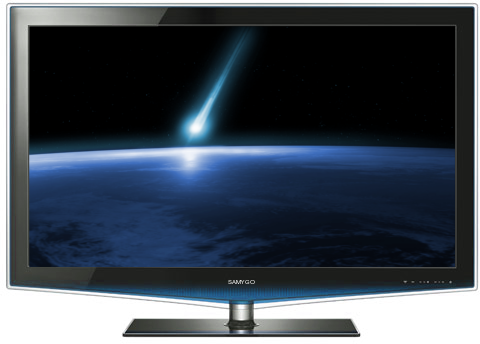
SamyGO
Source: SamyGO
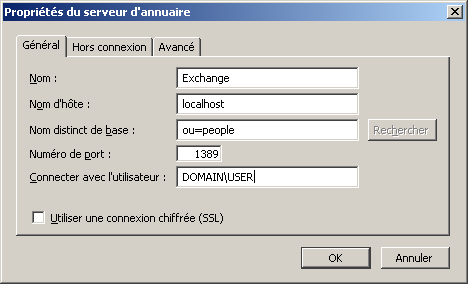
DavMail POP/IMAP/SMTP/Caldav/Carddav/LDAP Exchange Gateway – Thunderbird directory setup
Thunderbird directory setupDavMail Directory support is now available to access Exchange address book through LDAP.
Source: DavMail POP/IMAP/SMTP/Caldav/Carddav/LDAP Exchange Gateway – Thunderbird directory setup
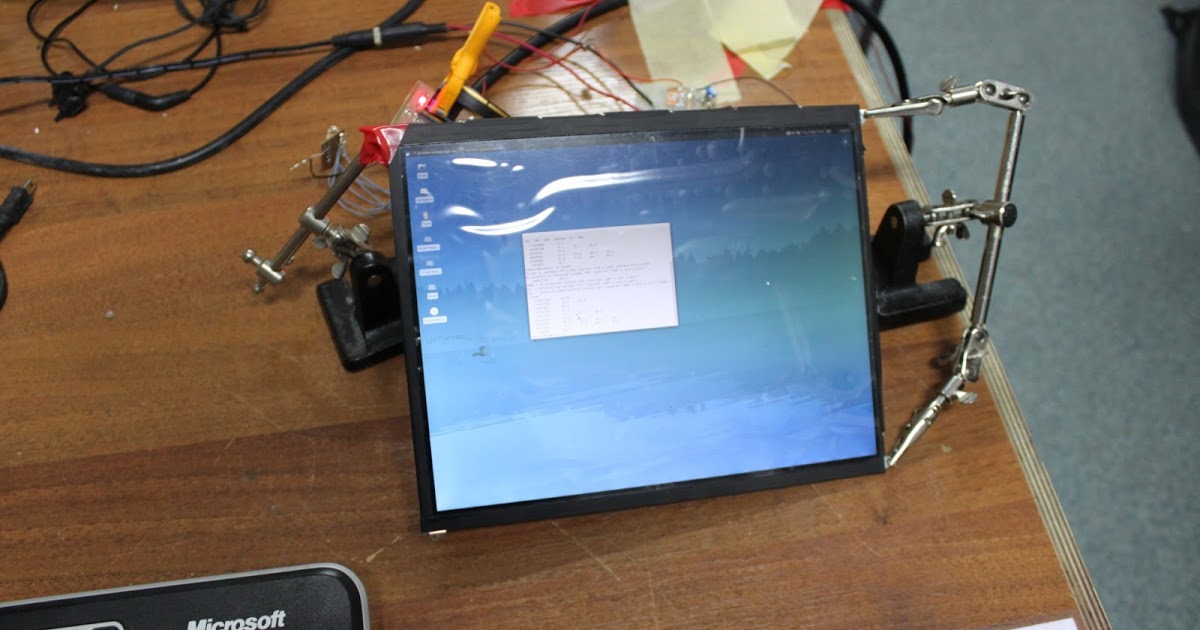
EmerytHacks: Connecting an iPad retina LCD to a PC
Arduino vs Netduino : the more things change, more they remain same. | ramblings of a mad man
Arduino and Netduino are kinda of like small computers that have allowed us to do marvelous things, like controlling our environment and more they are not really that expensive Arduino mega 2560 is…
Source: Arduino vs Netduino : the more things change, more they remain same. | ramblings of a mad man
Netduino
Source: Netduino :: home | Evernote Web
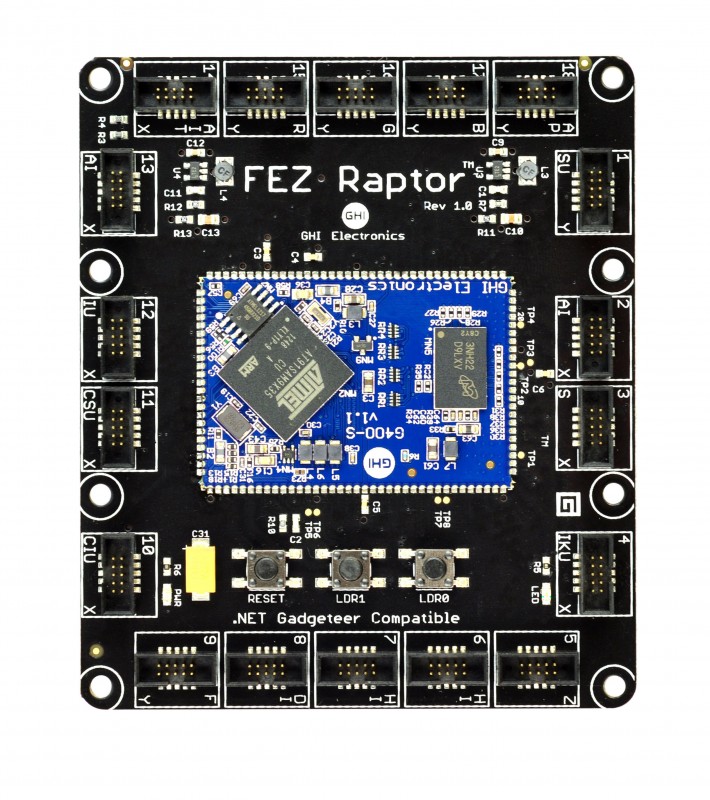
What is the difference betweet Netduino and .NET Gadgeteer? – Stack Overflow
Gadgeteer | .NET Micro Framework
Microsoft .NET Gadgeteer is an open-source toolkit for building small electronic devices using the .NET Micro Framework. It combines the advantages of object-oriented programming, solderless assembly of electronics, and support for customizable physical design.
Source: Gadgeteer | .NET Micro Framework
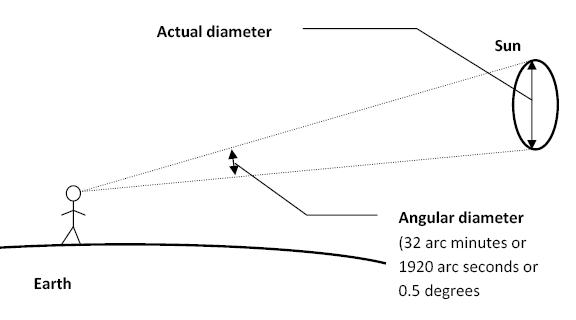
Angular diameter
The angular diameter or apparent size is an angular measurement describing how large a sphere or circle appears from a given point of view. In the vision sciences it is called the visual angle and in optics it is the angular aperture (of a lens). The angular diameter can alternatively be thought of as the angle through which an eye or camera must rotate to look from one side of an apparent circle to the opposite side. Angular radius equals half the angular diameter.
Source: Angular diameter – Wikipedia
Here Comes 5G—Whatever That Is from Spectrum 01.17
With 5G, carriers hope to deliver data to smartphone users at speeds 10 times as fast as on today’s 4G networks, and with only 1 millisecond of delay.
Both Verizon and AT&T say their 2017 fixed wireless networks will rely on millimeter waves, which are arguably the hottest new 5G technology. Millimeter waves are officially defined as waves transmitted at frequencies between 30 and 300 gigahertz, and they are between 1 and 10 millimeters in length.
Google Tensor processing units
Open main menu
Search Wikipedia
EditWatch this pageRead in another language
Tensor processing unit
Tensor processing units (or TPUs) are application-specific integrated circuits (ASIC) developed specifically for machine learning. Compared to graphics processing units (which as of 2016 are frequently used for the same tasks), they are designed explicitly for a higher volume of reduced precision computation with higher IOPS per watt (e.g. as little as 8-bit precision[1]), and lack hardware for rasterisation/texture mapping.[2] The chip has been specifically designed for Google’s TensorFlow framework, however Google still uses CPUs and GPUs for other machine learning.[3] Other AI accelerator designs are appearing from other vendors also and are aimed at embedded and robotics markets.
Google has stated that its proprietary tensor processing units were used in the AlphaGo versus Lee Sedol series of man-machine Go games.[2] Google has also used TPUs for Google Street View text processing, and was able to find all the text in the Street View database in less than five days. In Google Photos, an individual TPU can process over 100 million photos a day. It is also used in RankBrain which Google uses to provide search results.[4] The tensor processing unit was announced in 2016 at Google I/O, although the company stated that the TPU had been used inside their datacenter for over a year prior.[3][2]
The chip size can fit in a hard drive slot within a data center rack according to Google Distinguished Hardware Engineer Norm Jouppi.[3]
See also Edit
Vision processing unit a similar device specialised for vision processing.
TrueNorth a similar device simulating spiking neurons instead of low precision tensors.
Neural processing unit
References Edit
^ Armasu, Lucian (2016-05-19). “Google’s Big Chip Unveil For Machine Learning: Tensor Processing Unit With 10x Better Efficiency (Updated)”. Tom’s Hardware. Retrieved 2016-06-26.
^ a b c Jouppi, Norm (May 18, 2016). “Google supercharges machine learning tasks with TPU custom chip”. Google Cloud Platform Blog. Google. Retrieved 2017-01-22.
^ a b c “Google’s Tensor Processing Unit explained: this is what the future of computing looks like”. TechRadar. Retrieved 2017-01-19.
^ “Google’s Tensor Processing Unit could advance Moore’s Law 7 years into the future”. PCWorld. Retrieved 2017-01-19.
Last edited 12 days ago by PirateImpulse
Content is available under CC BY-SA 3.0 unless otherwise noted.
Terms of UsePrivacyDesktop
Mary Jackson (engineer)
Mary Winston Jackson (April 9, 1921 – February 11, 2005) was an African American mathematician and aerospace engineer at the National Advisory Committee for Aeronautics (NACA), which in 1958 was succeeded by theNational Aeronautics and Space Administration (NASA). She worked atLangley Research Center in Hampton, Virginia, for most of her career. She started as a computer at the segregated West Area Computing division. She took advanced engineering classes and in 1958 became NASA’s first black female engineer.
After 34 years at NASA, Jackson had earned the most senior engineering title available. She realized she could not earn further promotions without becoming a supervisor. She accepted a demotion to become a manager of both the Federal Women’s Program, in the NASA Office of Equal Opportunity Programs, and of the Affirmative Action Program. In this role, she worked to influence both the hiring and promotion of women in NASA’s science, engineering, and mathematics careers.
Jackson’s story features in the non-fiction book Hidden Figures: The Story of the African-American Women Who Helped Win the Space Race (2016). She is one of the three protagonists in Hidden Figures, the film adaptation released the same year.