Music notes

Spinto

Spinto (from Italian, “pushed”) is a vocal term used to characterize a soprano or tenor voice of a weight between lyric and dramatic that is capable of handling large musical climaxes in opera at moderate intervals. (Sometimes the terms lirico-spinto or jugendlich-dramatisch are used to denote this category of voice.)

The spinto voice type is recognisable by its tonal “slice” or squillo. This enables the singer to cut through the wall of sound produced by a full Romantic orchestra in a wide variety of roles, excluding only the most taxing ones written by the likes of Richard Wagner (such as Brünhilde, Isolde, Tristan and Siegfried), Giacomo Meyerbeer (John of Leyden), Verdi (Otello), Puccini (Turandot, Calaf) and Richard Strauss (Elektra).

  • Spinto soprano: a fundamentally lyric soprano with a fair amount of extra “pulp” in her tone and a distinct thrust in her vocal attack. As they possess both a lyric and a dramatic quality, spinto sopranos are suitable for a broad spectrum of roles, ranging from genuine lyric parts such as Micaela in Carmen and Mimì in La bohème through to histrionically demanding Verdi heroines such as Leonora (in Il trovatore and La forza del destino) and Aida, not to mention Puccini‘s Madama Butterfly and Tosca. Lighter Wagnerian roles such as Elsa in Lohengrin or Elisabeth in Tannhäuser also fall within their domain. Elisabeth Rethberg is a famous example of a soprano who sang exactly this kind of mixed Italian and German repertoire.
  • Tenore spinto: the tenor equivalent of the above. He can convincingly sing roles as lyrical as Rodolfo in La bohème, the Duke in Rigoletto and Alfredo in La traviata, yet still excel in parts as heavy as Cavaradossi in Tosca, Don Jose in Carmen and Radames in Aïda. Canio, in Pagliacci, and Lohengrin in Richard Wagner’s eponymous opera, which are other well-known examples of spinto tenor parts.

Source: Spinto – Wikipedia
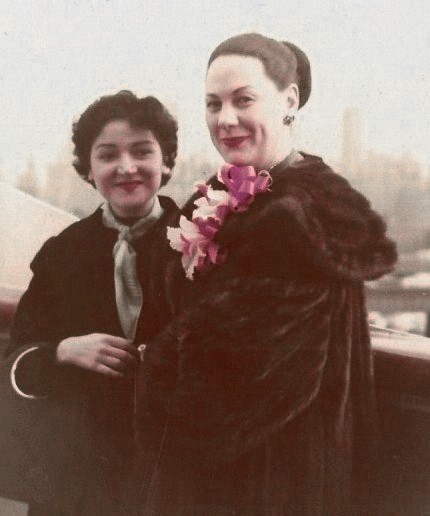
Renata Tebaldi

Renata Tebaldi (pronounced [reˈnaːta teˈbaldi]; 1 February 1922 – 19 December 2004) was an Italian lirico-spinto soprano popular in the post-war period. Among the most beloved opera singers, she has been said to have possessed one of the most beautiful voices of the 20th century which was focused primarily on the verismo roles of the lyric and dramatic repertoires.[1][2][3]

Source: Renata Tebaldi – Wikipedia

Antonio Caldara

Antonio Caldara (1670 – 28 December 1736) was an Italian Baroque composer.

Caldara was born in Venice (exact date unknown), the son of a violinist. He became a chorister at St Mark’s in Venice, where he learned several instruments, probably under the instruction of Giovanni Legrenzi. In 1699 he relocated to Mantua, where he became maestro di cappella to the inept Charles IV, Duke of Mantua, a pensionary of France with a French wife, who took the French side in the War of the Spanish Succession. Caldara removed from Mantua in 1707, after the French were expelled from Italy, then moved on to Barcelona as chamber composer to Charles III, the pretender to the Spanish throne (following the death of Charles II of Spain in 1700 without any direct heir) and who kept a royal court at Barcelona. There, he wrote some operas that are the first Italian operas performed in Spain. He moved on to Rome, becoming maestro di cappella to Francesco Maria Marescotti Ruspoli, 1st Prince of Cerveteri. While there he wrote in 1710 La costanza in amor vince l’inganno (Faithfulness in Love Defeats Treachery) for the public theatre at Macerata.

With the unexpected death of Emperor Joseph I from smallpox at the age of 32 in April 1711, Caldara deemed it prudent to renew his connections with Charles III – soon to become Holy Roman Emperor Charles VI – as he travelled from Spain to Vienna via northern Italy. Caldara visited Vienna in 1712, but found Marc’Antonio Ziani and Johann Joseph Fux firmly ensconced in the two highest musical posts. He stopped at the Salzburg court on his return journey to Rome, where he was well received (and to which he subsequently sent one new opera annually from 1716 and 1727). In 1716, following the death the previous year of Ziani and the promotion of Fux to Hofkapellmeister, Caldara was appointed Vice-Kapellmeister to the Imperial Court in Vienna, and there he remained until his death.

Caldara is best known as a composer of operas, cantatas and oratorios. Several of his works have libretti by Pietro Metastasio, the court poet at Vienna from 1729.

Source: Antonio Caldara – Wikipedia

Wes Montgomery

John Leslie “Wes” Montgomery (March 6, 1923 – June 15, 1968)[1] was an American jazz guitarist. He is widely considered one of the major jazz guitarists, emerging after such seminal figures as Django Reinhardt and Charlie Christian and influencing countless others. Montgomery was known for an unusual technique of plucking the strings with the side of his thumb which granted him a distinctive sound. He often worked with organist Jimmy Smith, and with his brothers Buddy (piano and vibes) and Monk (bass guit

Source: Wes Montgomery – Wikipedia

Symphony No. 1 (Brahms)

Symphony No. 1 in C minor, Op. 68, is a symphony written by Johannes Brahms. Brahms spent at least fourteen years completing this work, whose sketches date from 1854. Brahms himself declared that the symphony, from sketches to finishing touches, took 21 years, from 1855 to 1876. The premiere of this symphony, conducted by the composer’s friend Felix Otto Dessoff, occurred on 4 November 1876, in Karlsruhe, then in the Grand Duchy of Baden. A typical performance lasts between 45 and 50 minutes.

Source: Symphony No. 1 (Brahms) – Wikipedia

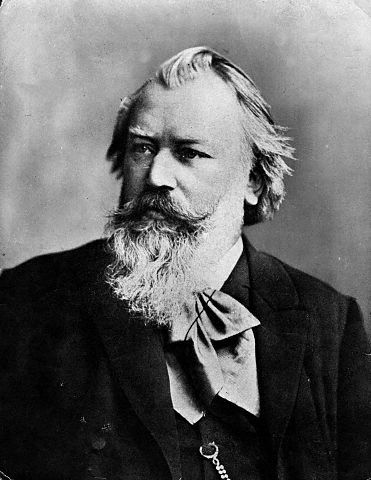
Johannes Brahms

Johannes Brahms (German: [joˈhanəs ˈbʁaːms]; 7 May 1833 – 3 April 1897) was a German composer and pianist. Born in Hamburg into a Lutheran family, Brahms spent much of his professional life in Vienna, Austria. His reputation and status as a composer is such that he is sometimes grouped with Johann Sebastian Bach and Ludwig van Beethoven as one of the “Three Bs” of music, a comment originally made by the nineteenth-century conductor Hans von Bülow.

Brahms composed for symphony orchestra, chamber ensembles, piano, organ, and voice and chorus. A virtuoso pianist, he premiered many of his own works. He worked with some of the leading performers of his time, including the pianist Clara Schumann and the violinist Joseph Joachim (the three were close friends). Many of his works have become staples of the modern concert repertoire. An uncompromising perfectionist, Brahms destroyed some of his works and left others unpublished.[1]

Brahms has been considered, by his contemporaries and by later writers, as both a traditionalist and an innovator. His music is firmly rooted in the structures and compositional techniques of the Classical masters. While many contemporaries found his music too academic, his contribution and craftsmanship have been admired by subsequent figures as diverse as Arnold Schoenberg and Edward Elgar. The diligent, highly constructed nature of Brahms’s works was a starting point and an inspiration for a generation of composers. Within his meticulous structures is embedded, however, a highly romantic nature.

Source: Johannes Brahms – Wikipedia

Ileana Cotrubaș

Ileana Cotrubaș (Romanian pronunciation: [iˈle̯ana kotruˈbaʃ] ( listen); born June 9, 1939) is a Romanian opera soprano whose career spanned from the 1960s to the 1980s.[1] She was much admired for her acting skills and facility for singing opera in many different languages.

Source: Ileana Cotrubaș – Wikipedia