Music notes

Tuplet

In music, a tuplet (also irrational rhythm or groupings, artificial division or groupings, abnormal divisions, irregular rhythm, gruppetto, extra-metric groupings, or, rarely, contrametric rhythm) is “any rhythm that involves dividing the beat into a different number of equal subdivisions from that usually permitted by the time-signature (e.g., triplets, duplets, etc.)” (Humphries 2002, 266). This is indicated by a number (or sometimes two), indicating the fraction involved. The notes involved are also often grouped with a bracket or (in older notation) a slur.

Source: Tuplet – Wikipedia
Metre (music)

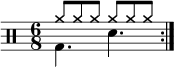
Compound metre (or compound time), is a metre in which each beat of the bar divides naturally into three equal parts. That is, each beat contains a triple pulse (Latham 2002a). The top number in the time signature will be 6, 9, 12, 15, 18, 24, etc.

Compound metres are written with a time signature that shows the number of divisions of beats in each bar as opposed to the number of beats.

https://en.wikipedia.org/wiki/Metre_(music)

Subdominant

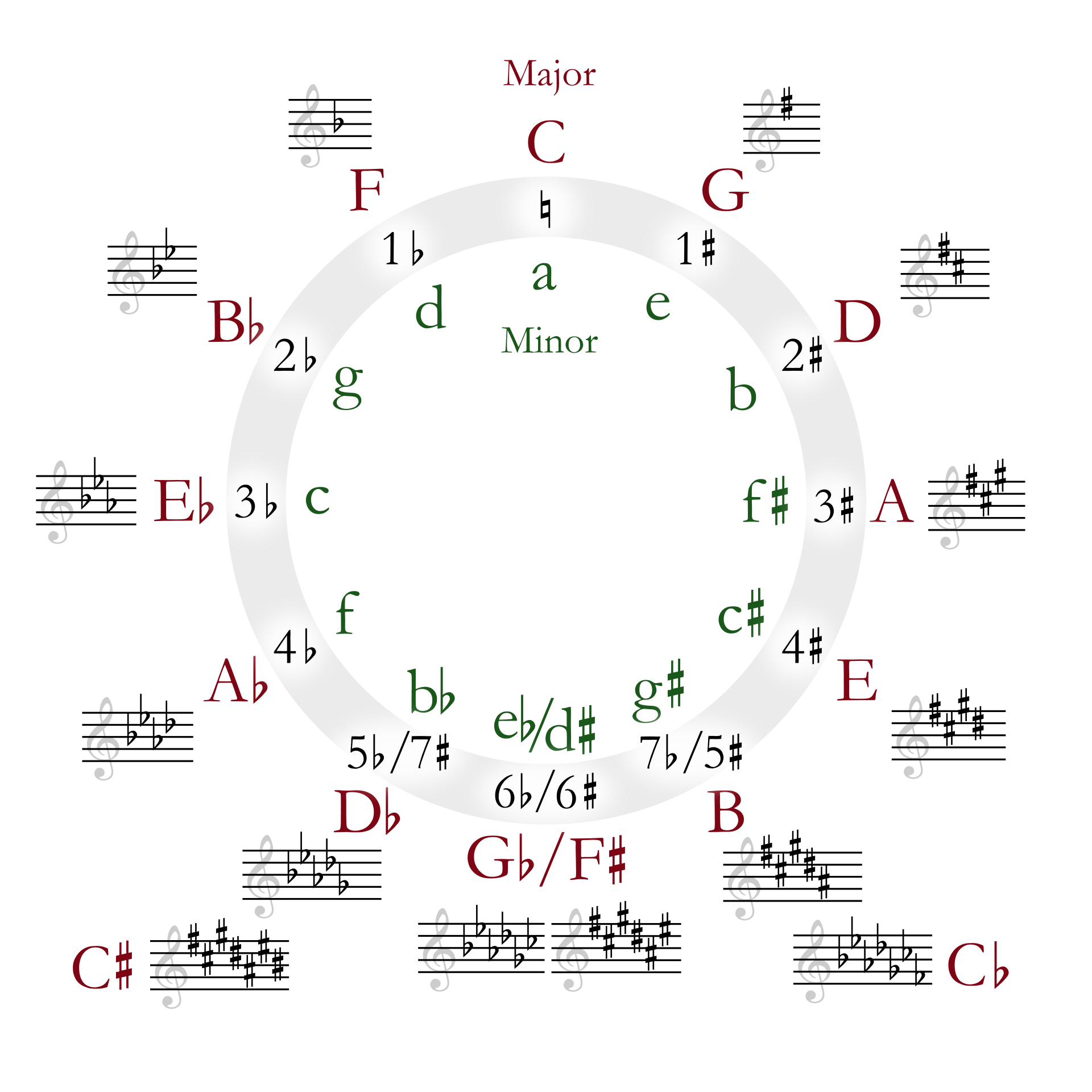
In music, the subdominant is the technical name for the fourth tonal degree of the diatonic scale. It is so called because it is the same distance “below” the tonic as the dominant is above the tonic – in other words, the tonic is the dominant of the subdominant. It also happens to be the note immediately “below” the dominant. It is sung as fa in solfege. In the C major scale (white keys on a piano, starting on C), the subdominant is the note F; and the subdominant chord uses the notes F, A, and C. In music theory, Roman numerals are used to symbolize the subdominant chord as ‘IV’ if it is within the major mode (because it is a major triad, for example F-A-C in C major) or ‘iv’ if it is within the minor mode (because it is a minor triad, for example F-A-C in C minor).

https://en.wikipedia.org/wiki/Subdominant

Dominant (music)

In music, the dominant is the fifth scale degree of the diatonic scale, called “dominant” because it is next in importance to the tonic, and a dominant chord is any chord built upon that pitch, using the notes of the same diatonic scale. The dominant is sung as so in solfege. The dominant function (diatonic function) has the role of creating instability that requires the tonic for resolution.

https://en.wikipedia.org/wiki/Dominant_(music)