
2A Boost DC-DC 3.3V 5V 9V 12V Step up Adjustable Power Supply Converter Module
 Jovan Stosic
Jovan Stosic
Jovan Stosic
Jovan Stosic
Jovan Stosic
In the Android development community, usage for Kotlin continues to grow, especially since its introduction as a preferred language by Google in 2017. So, which language should you choose for developing your app for Android? This article goes over some of the benefits that developing in Kotlin has over Java.
Jovan Stosic
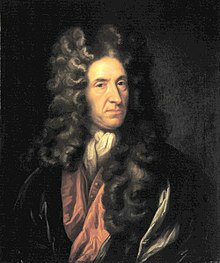
Daniel Defoe (/dɪˈfoʊ/; c. 1660 – 24 April 1731), born Daniel Foe, was an English trader, writer, journalist, pamphleteer and spy. He is most famous for his novel Robinson Crusoe, which is second only to the Bible in its number of translations. He has been seen as one of the earliest proponents of the English novel, and helped to popularise the form in Britain with others such as Aphra Behn and Samuel Richardson.Defoe wrote many political tracts and often was in trouble with the authorities, including a spell in prison. Intellectuals and political leaders paid attention to his fresh ideas and sometimes consulted with him.
Defoe was a prolific and versatile writer, producing more than three hundred works—books, pamphlets, and journals—on diverse topics, including politics, crime, religion, marriage, psychology, and the supernatural. He was also a pioneer of business journalism and economic journalism.
Jovan Stosic
Jovan Stosic
Jovan Stosic
Jovan Stosic
Jovan Stosic
The main functionalities of a CAS are to perform numerical computations, symbolic computations, data analysis, and data visualization. Due to its widespread domain, various computer algebra systems for Linux exist, dealing with different types of applications. Our editors have outlined 20 best computer algebra systems that can be used by mathematicians, data science professionals, or higher-studies purposes.
Source: Top 20 Best Computer Algebra Systems for Linux in 2019
Jovan Stosic
Source: About FFT of sine wave – MATLAB Answers – MATLAB Central
Jovan Stosic
Charles Gravier, Count of Vergennes (French pronunciation: [vɛʁ.ʒɛn]; 29 December 1719 – 13 February 1787) was a French statesman and diplomat. He served as Foreign Minister from 1774 during the reign of Louis XVI, notably during the American War of Independence.
https://en.wikipedia.org/wiki/Charles_Gravier,_comte_de_Vergennes
Jovan Stosic
pkg install -forge package_name
Source: Category:Octave Forge – Octave
Jovan Stosic

0 Comments