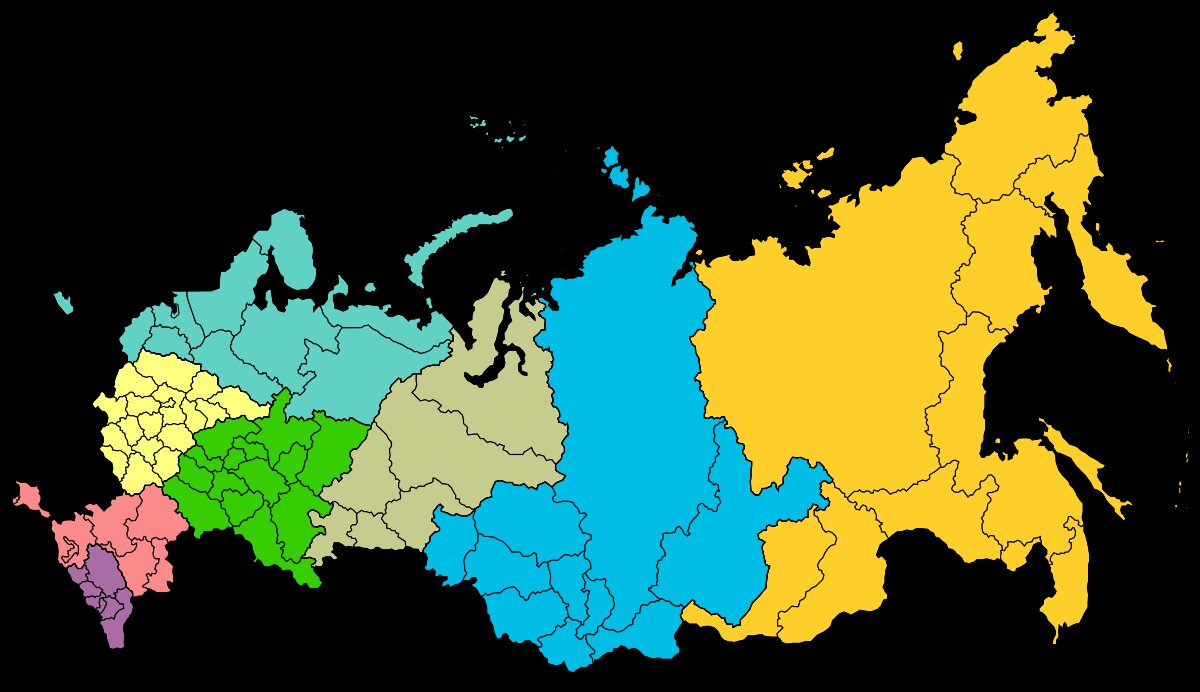
Federal districts of Russia
 Jovan Stosic
Jovan Stosic
Jovan Stosic
Jovan Stosic
Jovan Stosic
Mily Alexeyevich Balakirev (Russian: Милий Алексеевич Балакирев, IPA: [ˈmʲilʲɪj ɐlʲɪkˈsʲeɪvʲɪtɕ bɐˈɫakʲɪrʲɪf]; 2 January 1837 [O.S. 21 December 1836] – 29 May [O.S. 16 May] 1910) was a Russian composer, pianist, and conductor known today primarily for his work promoting musical nationalism and his encouragement of more famous Russian composers, notably Pyotr Ilyich Tchaikovsky. He began his career as a pivotal figure, extending the fusion of traditional folk music and experimental classical music practices begun by composer Mikhail Glinka. In the process, Balakirev developed musical patterns that could express overt nationalistic feeling. After a nervous breakdown and consequent sabbatical, he returned to classical music but did not wield the same level of influence as before.
In conjunction with critic and fellow nationalist Vladimir Stasov, in the late 1850s and early 1860s Balakirev brought together the composers now known as The Five (a.k.a., The Mighty Handful) – the others were Alexander Borodin, César Cui, Modest Mussorgsky and Nikolai Rimsky-Korsakov. For several years, Balakirev was the only professional musician of the group; the others were amateurs limited in musical education. He imparted to them his musical beliefs, which continued to underlie their thinking long after he left the group in 1871, and encouraged their compositional efforts. While his methods could be dictatorial, the results of his influence were several works which established these composers’ reputations individually and as a group. He performed a similar function for Tchaikovsky at two points in the latter’s career – in 1868–69 with the fantasy-overture Romeo and Juliet and in 1882–85 with the Manfred Symphony.
As a composer, Balakirev finished major works many years after he had started them; he began his First Symphony in 1864 but completed it in 1897. The exception to this was his oriental fantasy Islamey for solo piano, which he composed quickly and remains popular among virtuosos. Often, the musical ideas normally associated with Rimsky-Korsakov or Borodin originated in Balakirev’s compositions, which Balakirev played at informal gatherings of The Five. However, his slow pace in completing works for the public deprived him of credit for his inventiveness, and pieces that would have enjoyed success had they been completed in the 1860s and 1870s made a much smaller impact.
Jovan Stosic
Jovan Stosic
Using FCM, you can notify a client app that new email or other data is available to sync. You can send notification messages to drive user re-engagement and retention. For use cases such as instant messaging, a message can transfer a payload of up to 4KB to a client app.
Source: Firebase Cloud Messaging
Jovan Stosic
- Add Nagios user:
htpasswd /usr/local/nagios/etc/htpasswd.users joe_user
- update passwd:
htpasswd /usr/local/nagios/etc/htpasswd.users joe_user
- delete user:
htpasswd -D /usr/local/nagios/etc/htpasswd.users joe_userSource: Creating user IDs and passwords for the Nagios Core web interface
Jovan Stosic
define host{
use                     linux-server
host_name               email-server
alias                   Corporate Email Server
address                 192.168.1.14
contact_groups          unix-admins
}
Source: 4 Steps to Define Nagios Contacts With Email and Pager Notification
Jovan Stosic
Nagios-Status-JSON
Jovan Stosic
In computer networking, xinetd (Extended Internet Service Daemon) is an open-source super-server daemon, runs on many Unix-like systems and manages Internet-based connectivity.
It offers a more secure alternative to the older inetd (“the Internet daemon”), which most modern Linux distributions have deprecated.
xinetd listens for incoming requests over a network and launches the appropriate service for that request. Requests are made using port numbers as identifiers and xinetd usually launches another daemon to handle the request. It can be used to start services with both privileged and non-privileged port numbers.
xinetd features access control mechanisms such as TCP Wrapper ACLs, extensive logging capabilities, and the ability to make services available based on time. It can place limits on the number of servers that the system can start, and has deployable defense mechanisms to protect against port scanners, among other things.
On some implementations of Mac OS X, this daemon starts and maintains various Internet-related services, including FTP and telnet. As an extended form of inetd, it offers enhanced security. It replaced inetd in Mac OS X v10.3, and subsequently launchd replaced it in Mac OS X v10.4. However, Apple has retained inetd for compatibility purposes.
Source: xinetd – Wikipedia
Jovan Stosic
Jovan Stosic
efine command{
command_name check_nrpe_lb
command_line $USER1$/check_nrpe -H $HOSTADDRESS$ -c $ARG1$ -p $_HOSTTCPORT$
}
define host{
use linux-remote
host_name WS1
address 1.1.1.1
_tcport 5667
}
define service{
use generic-service,srv-pnp
host_name WS1
service_description Server Load
check_command check_nrpe_lb!check_load
}
Source: remote NRPE help on different port – View topic • Nagios Support Forum
Jovan Stosic
Jovan Stosic