RTL-SDR and Ubuntu 14.04 – rtl-sdr.com
 Jovan Stosic
Jovan Stosic
Jovan Stosic
Jovan Stosic
Jovan Stosic
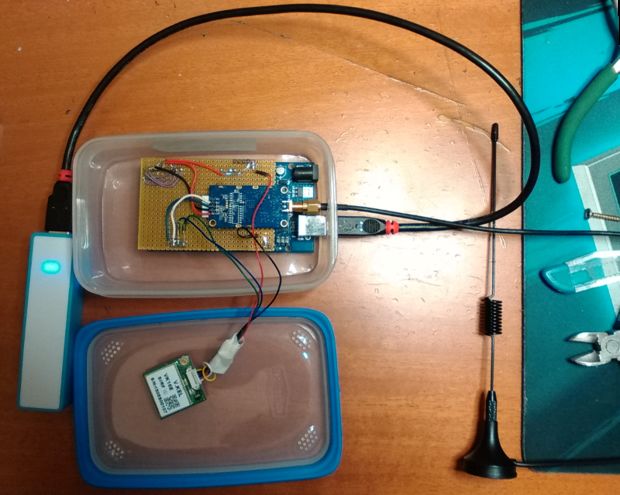
How to equip Arduino with a long-range communication module, and one based on Semtech technology.
Source: The LoRa shield: an Open Source Arduino’s long-range communication module | Open Electronics
Jovan Stosic
Jovan Stosic
Sigfox is a French company founded in 2009 that builds wireless networks to connect low-energy objects such as electricity meters, smartwatches, and washing machines, which need to be continuously on and emitting small amounts of data.
Sigfox is based in Labège near Toulouse, France, and has over 80 employees.[3] The firm also has offices in Madrid, San Francisco, Sydney and Paris.[4][5]
Source: Sigfox – Wikipedia
Jovan Stosic
Jovan Stosic
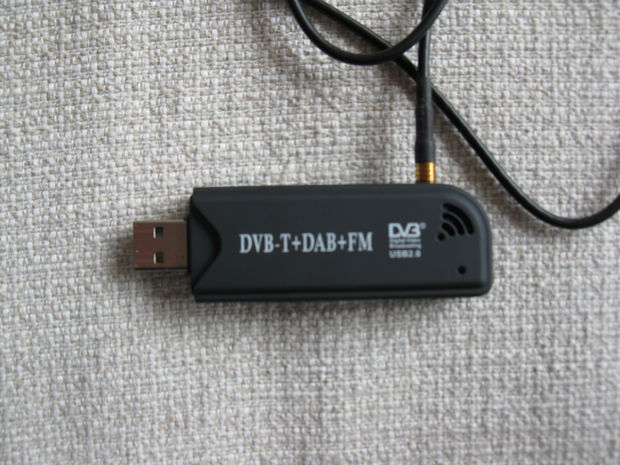
Source: Rtl-sdr on Ubuntu: 4 Steps
Jovan Stosic
Mobile Edge Computing (MEC) is a network architecture concept that enables cloud computing capabilities and an IT service environment at the edge of the cellular network. The basic idea behind MEC is that by running applications and performing related processing tasks closer to the cellular customer, network congestion is reduced and applications perform better. MEC technology is designed to be implemented at the cellular base stations, and enables flexible and rapid deployment of new applications and services for customers. Combining elements of information technology and telecommunications networking, MEC also allows cellular operators to open their radio access network (RAN) to authorized third-parties, such as application developers and content providers.
Technical standards for MEC are being developed by the European Telecommunications Standards Institute, which has produced a technical white paper about the concept.
Jovan Stosic
In information theory, a low-density parity-check (LDPC) code is a linear error correcting code, a method of transmitting a message over a noisy transmission channel.[1][2] An LDPC is constructed using a sparse bipartite graph.[3] LDPC codes are capacity-approaching codes, which means that practical constructions exist that allow the noise threshold to be set very close (or even arbitrarily close on the binary erasure channel) to the theoretical maximum (the Shannon limit) for a symmetric memoryless channel
Jovan Stosic
Jovan Stosic
Jovan Stosic
Jovan Stosic