http://www.instructables.com/id/Make-an-inexpensive-Lithium-Ion-Battery-Pack/
Make an Inexpensive Lithium-Ion Battery Pack: 10 Steps (with Pictures)
 Jovan Stosic
Jovan Stosic
Jovan Stosic
Jovan Stosic
Jovan Stosic
Jovan Stosic
Jovan Stosic
Jovan Stosic
Jovan Stosic
Jovan Stosic
Jovan Stosic
Ry Cooder – Onda Callejera
Jovan Stosic

“My Ding-a-Ling” is a novelty song written and recorded by Dave Bartholomew. It was covered by Chuck Berry in 1972 and became his only number-one Billboard Hot 100 single in the United States.[1] Later that year, in a longer unedited form, it was included on the album The London Chuck Berry Sessions. Guitarist Onnie McIntyre and drummer Robbie McIntosh who later that year went on to form the Average White Band, played on the single along with Nic Potter of Van der Graaf Generator on bass.
“My Ding-a-Ling” was originally recorded by Dave Bartholomew in 1952 for King Records. When Bartholomew moved to Imperial Records, he re-recorded the song under the new title, “Little Girl Sing Ting-a-Ling”. In 1954, the Bees on Imperial released a version entitled “Toy Bell”. Berry recorded a version called “My Tambourine” in 1968, but the version which topped the charts was recorded live during the Lanchester Arts Festival at the Locarno ballroom in Coventry, England, on 3 February 1972, where Berry – backed by the Roy Young Band – topped a bill that also included Slade, George Carlin, Billy Preston and Pink Floyd. Boston radio station WMEX disc jockey Jim Connors was credited with a gold record for discovering the song and pushing it to #1 over the airwaves and amongst his peers in the United States. Billboard ranked it as the No. 15 song for 1972.
The song is based on the melody of the 19th century folk song “Little Brown Jug”.
Source: My Ding-a-Ling – Wikipedia
Jovan Stosic
Jovan Stosic
Jovan Stosic
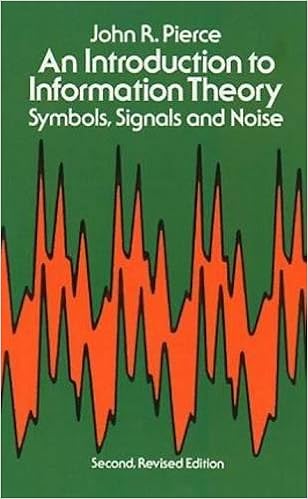
An Introduction to Information Theory: Symbols, Signals and Noise (Dover Books on Mathematics)
Оваа книга ја препорача Robert Lacoste во неговата колумна The Dark Side во Circuit Cellar December 2017.
Jovan Stosic
George Boole (/buːl/; 2 November 1815 – 8 December 1864) was an English mathematician, educator, philosopher and logician. He worked in the fields of differential equations and algebraic logic, and is best known as the author of The Laws of Thought (1854) which contains Boolean algebra. Boolean logic is credited with laying the foundations for the information age.[3] Boole maintained that:
Jovan Stosic
Jovan Stosic